
Technical enquiries+91 99044 90003
Request a Quote
Engineered all-metal filtration for high viscosity polymer processing. Designed to support stable melt cleanliness, controlled pressure development and protection of downstream equipment.
Media type, filtration rating, element geometry and connection are selected from the actual polymer, contamination, throughput and pressure profile.
Retain carbonised particles, metal oxides, agglomerates, undissolved polymer and gel-type contamination.
Controlled retention supports a cleaner and more uniform polymer stream.
Reduce visible defects, filament breaks and unplanned interruptions associated with contamination.
All-metal construction is suited to fibre, film, resin and other high-temperature polymer services.
Micron rating alone is not a complete specification — media structure, permeability, support, effective area and cleanability must suit the actual process.
| Media Option | Filtration Mechanism | Best-Suited Duty | Operating Value |
|---|---|---|---|
| Woven Stainless Steel Mesh | Predominantly surface filtration with defined woven openings. | Hard particles, lower contaminant loading, coarser filtration. | Good permeability, narrow pore distribution, comparatively straightforward cleaning. |
| Sintered Stainless Steel Fibre | Three-dimensional depth filtration through a bonded porous fibre network. | Hard particles and deformable gel-type contamination. | High porosity and dirt holding, resistant to temperature, pressure and repeated cleaning. |
| Supported Composite Construction | Application-specific combination of filtration, drainage and structural layers. | Processes requiring a balance of gel control, strength and permeability. | Maintains pleat stability and distributes flow through the available area. |
Representative manufacturer-published values — the approved JV quotation, drawing and technical data sheet govern the supplied element.
| Typical Working Temperature | 300°C — confirm polymer temperature, alloy, dwell time and cleaning history |
| Typical Line / Housing Pressure | 30 MPa — not the same as differential pressure across the element |
| Max Differential Pressure | Up to 10 MPa — final limit must be certified for the exact element construction |
| Reported Dirt Holding Capacity | 16.9 to 41 mg/cm² — manufacturer published range; test method and media grade must be stated |
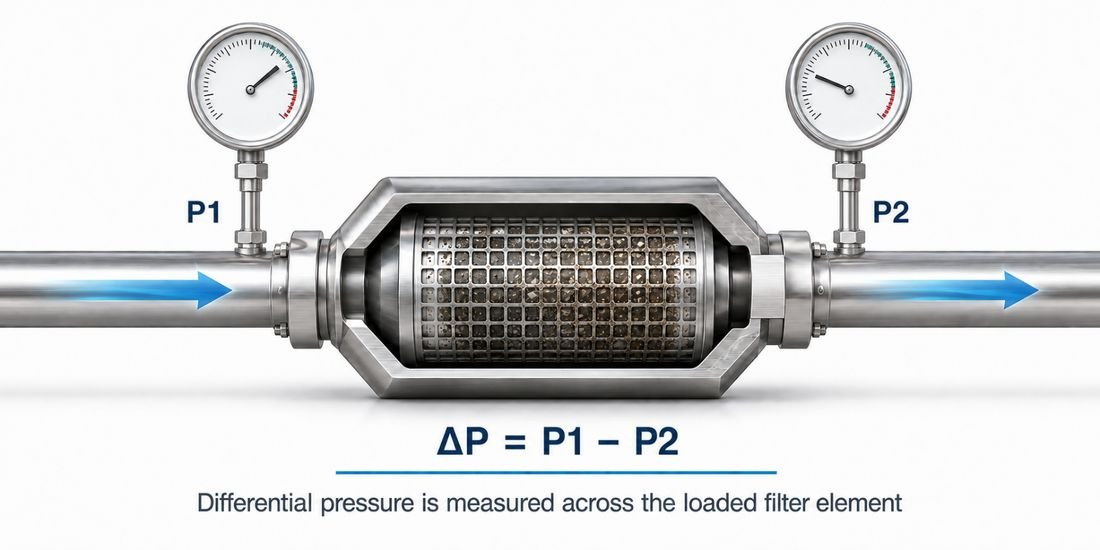
Line pressure and differential pressure describe different loads — both must remain within their stated limits.
| Working Pressure | The line or housing pressure acting on the element assembly. |
| Differential Pressure | Upstream pressure minus downstream pressure across the loaded element — the critical structural and terminal operating limit. |
| Clean Pressure Drop | The initial resistance at stabilised throughput, melt temperature and viscosity — use it as the baseline for monitoring pressure rise. |
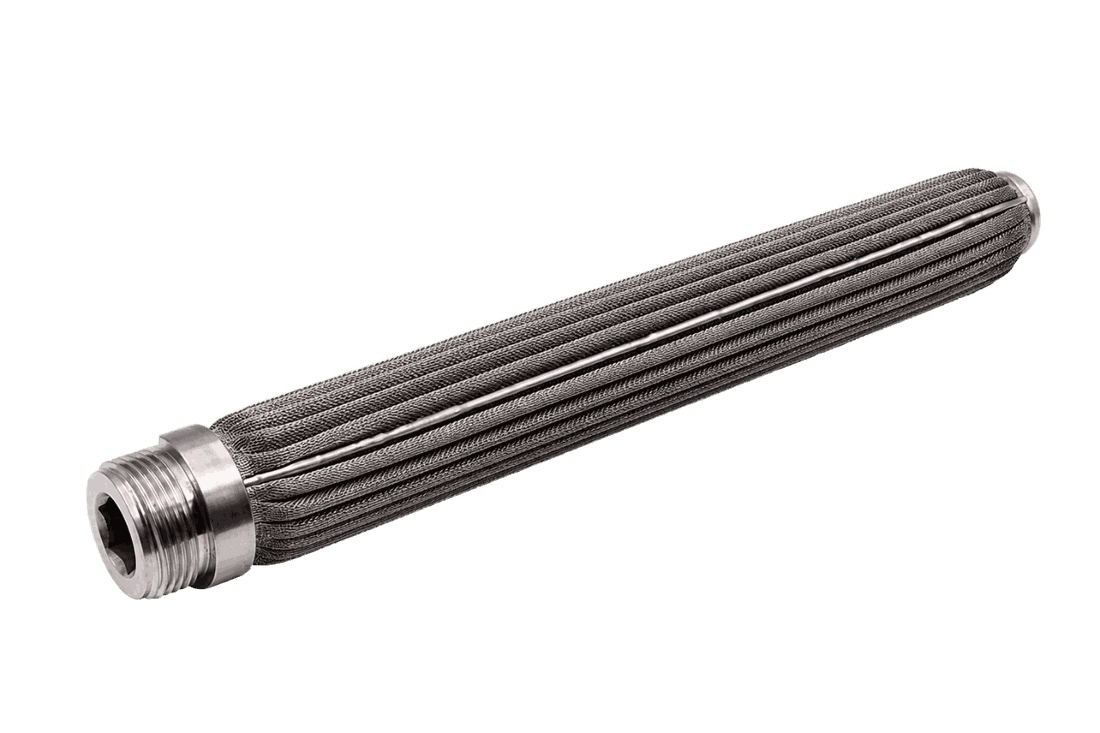
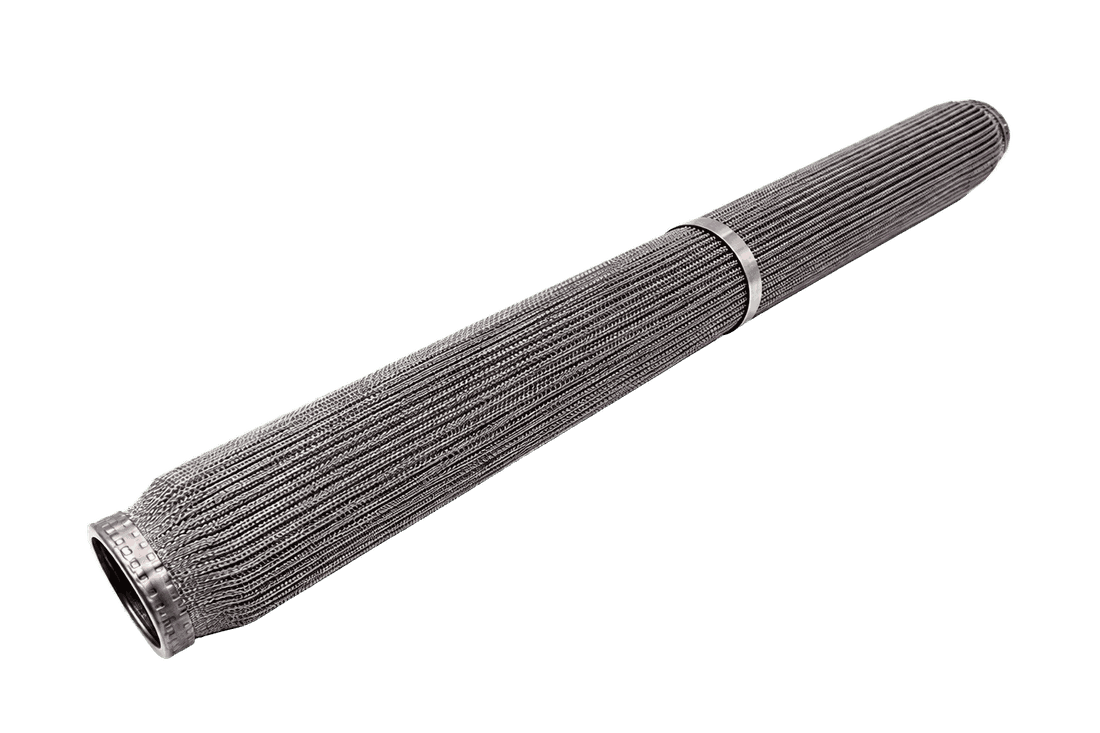
Supported multi-pleat media increases effective filtration area while the welded support structure maintains the flow path under pressure and cleaning cycles.
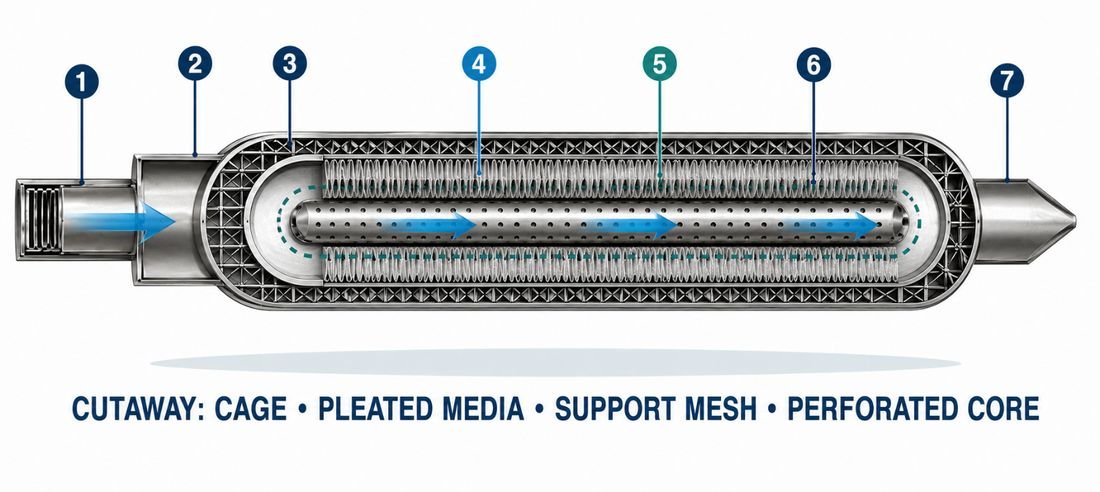
| No. | Component | Engineering Function |
|---|---|---|
| 1 | Connection / Adaptor | Matches the housing interface and transfers filtered melt to the outlet. |
| 2 | Welded End Fitting | Seals the media assembly and maintains mechanical integrity. |
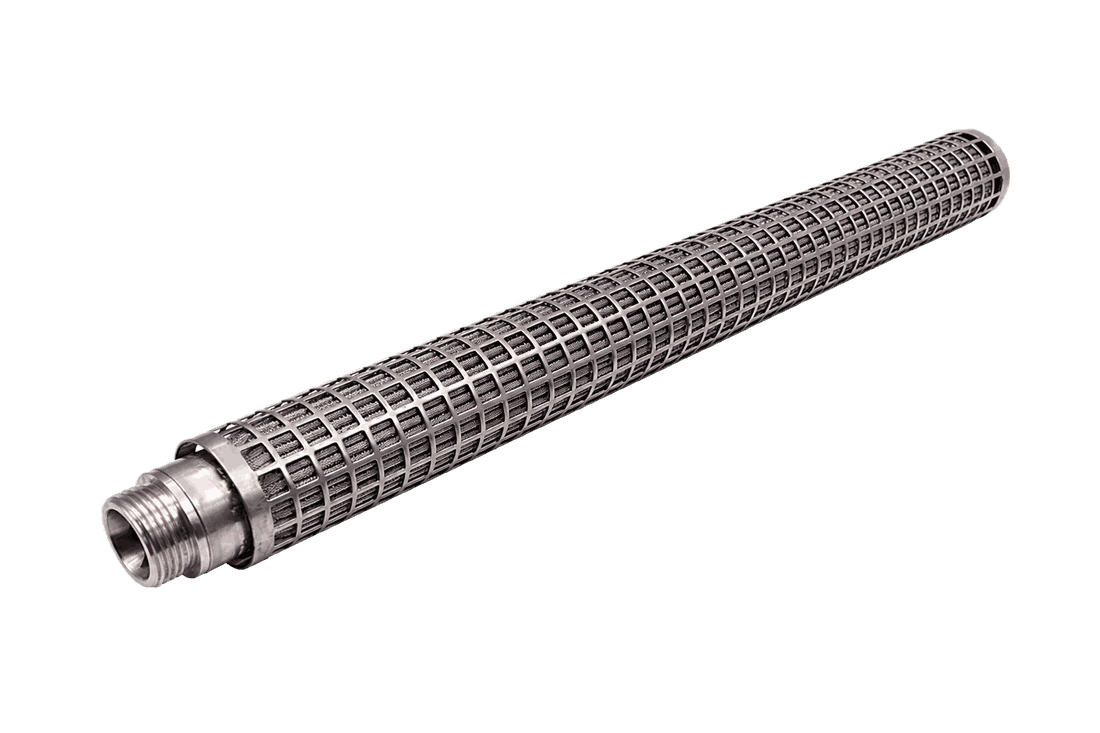
| 3 | Outer Guard / Support Cage | Protects the pleats during handling, operation and reverse cleaning. |
| 4 | Pleated Filtration Medium | Provides the required retention mechanism and effective area. |
| 5 | Drainage / Support Mesh | Supports the filtration medium and maintains flow channels. |
| 6 | Perforated Inner Core | Resists differential pressure and conveys the filtered polymer. |
| 7 | Closed End / Flow Guide | Reduces low-flow volume where included in the approved design. |
Standard and custom candle elements are configured for fibre, film, resin and other high-viscosity services, subject to complete design review.
| Application | Typical Contamination / Requirement | Selection Emphasis |
|---|---|---|
| PET and rPET Fibre | Carbonised polymer, gels, oxides, recycled-feed variability. | Gel retention, low pressure rise, stable on-stream life. |
| PA6 / PA66 Filament | Thermal sensitivity, gels and hard particles. | Low residence volume, compatible alloy, controlled differential pressure. |
| PP Fibre and Nonwovens | Additive agglomerates, char and solid contamination. | Required rating, throughput per element, cleanability. |
| Film and Resin Finishing | Visible defects, gels and final-product appearance. | Fine retention, uniform flow, integrity verification. |
A correctly selected candle filter helps prevent local flow restrictions and contamination-related weak points — average yarn properties remain governed mainly by polymer quality, metering, temperature, quenching, spinning speed and drawing.
| Quality Parameter | Expected Filtration Effect | Important Process Limit |
|---|---|---|
| Linear Density (Decitex / Denier) | Supports lower filament-to-filament and along-length variation by reducing capillary restriction and unstable contaminant passage. | Average linear density is primarily set by actual mass flow and take-up speed. |
| Tenacity | Reduces contaminant-related weak points; supports more consistent minimum strength and tenacity CV. | Mean tenacity remains strongly dependent on polymer molecular weight, orientation and draw. |
| Elongation | Supports a narrower elongation distribution through more uniform filament formation and drawing response. | The direction of the mean change is process-dependent. |
| Evenness / Uster CV% | Fewer transient restrictions, partial blockages and contaminant events can reduce thick-thin variation. | Pump, quench and winding stability must also be controlled. |
| Shrinkage & Dye Uptake | More uniform filament formation supports more consistent orientation, shrinkage and dye response. | Thermal history and drawing conditions remain decisive. |
| Defects & Line Stability | Fewer gels, slubs, broken filaments, spin breaks, fuzz and downstream interruptions. | An excessively fine or overloaded element can create high pressure and shorten service life. |
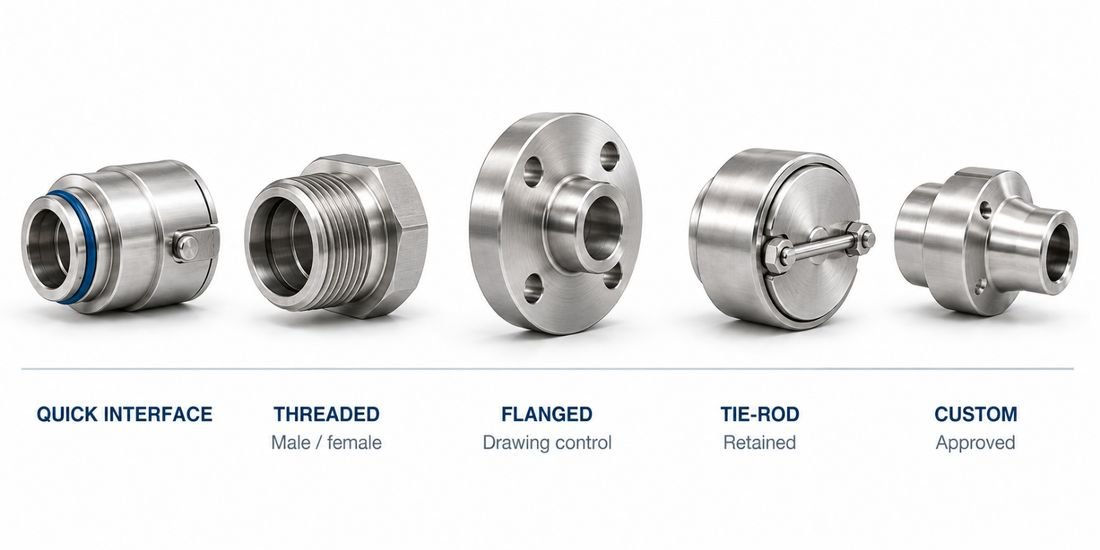
Connection names are only a starting point — sealing arrangement, insertion length, flow direction and removal feature must match the approved housing drawing or a verified reference sample.
Cleaning restores permeability only when the method is compatible with the polymer, media, alloy, welds and contamination. Typical controlled sequence: remove bulk polymer via an approved thermal or chemical process; clean media and flow paths using qualified reverse-flow, solvent, chemical or ultrasonic steps; neutralise, rinse and dry completely; inspect connection, welds, cage, pleats and dimensions; verify permeability and integrity before returning to service. Then requalify against these checks:
Detect damaged pleats, cage deformation, weld defects or interface wear.
Confirm polymer and cleaning residue have been adequately removed.
Detect large pores, leaks or breaches that could compromise retention.
Track cleaning count, pressure recovery and any change in integrity.
A nominal micron rating cannot compensate for an unsuitable area, support structure or interface.
| Polymer | Grade, virgin/recycled content, additives, intrinsic viscosity, thermal sensitivity. |
| Process Conditions | Normal/maximum temperature, total throughput, number of elements, viscosity, operating cycle. |
| Contamination | Hard particles, gels, char, oxides, agglomerates, target defect or current quality issue. |
| Filtration Requirement | Current and required retention rating, media type, effective area, required product quality. |
| Pressure Profile | Clean inlet/outlet pressure, initial differential pressure, terminal limit, pressure-rise rate. |
| Housing & Flow | Housing drawing, flow direction, element quantity, spacing, support, dead-volume constraints. |
| Element Dimensions | Overall length, effective length, OD, ID/core, end fitting, sealing diameters and tolerances. |
| Cleaning & Life | Existing cleaning method, cycle count, failure mode, on-stream life, post-cleaning test method. |
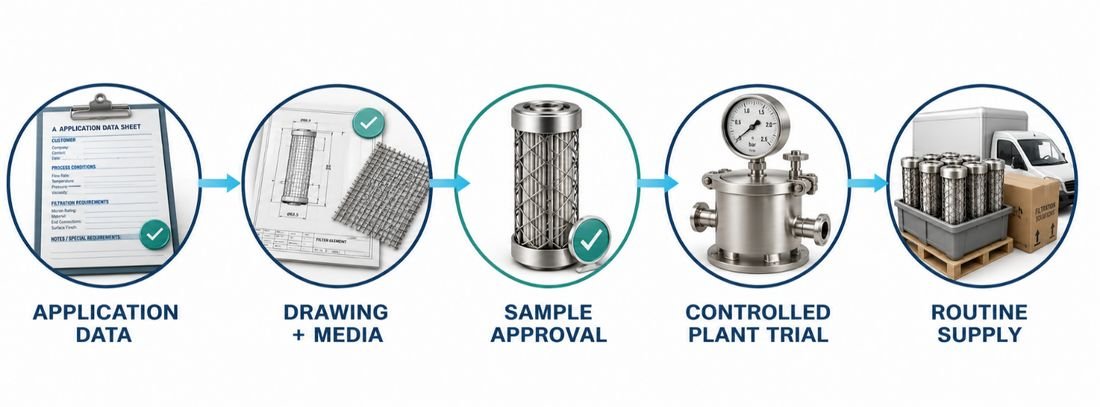
A controlled comparison with the existing approved element is the most reliable basis for routine supply approval: approve the element drawing, media description, rating method, dimensions and design limits; agree trial quantity, operating window, monitoring frequency and terminal differential pressure; run the trial beside a defined baseline under comparable conditions; review quality, pressure trend, on-stream life, cleanability and total operating cost before routine approval. Approve the complete element and process result — not only the nominal micron rating or initial purchase price.
Application review, drawing confirmation, sample qualification and planned supply.
 Call Us
 WhatsApp
 Enquiry